Zombie Second Mortgage Foreclosures: 15 Ways To Stab Them In The Heart
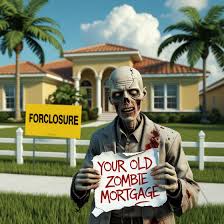
 Zombie second mortgage foreclosures can be terrifying. They rise from the dead and appear without warning. Hence, why they are called Zombie Mortgage Foreclosures. Now, they are appearing now more than ever. Therefore, Foreclosure Defense Network has created fifteen ways homeowners can stop foreclosures of zombie mortgages. For more information, contact the experts at Foreclosure Defense Network.
What Are Zombie Second Mortgages?
What are these zombie second mortgages that are wreaking havoc with homeowners today. Many were originated by predatory lenders in the years leading up to the 2008 financial crisis.
During that era of frenzied lending, brokers often combined first and second mortgages in a single loan transaction. Referred to as 80-20 mortgages. The transactions typically financed 80% of the principal balance through a first mortgage. Then the other 20% through a second mortgage. This kept the first mortgage within a LTV ratio for easy securitization.
Why Did These Second Mortgages Become Dormant?
 Many homeowners struggled to keep up on their first mortgages through the Great Recession. Lenders often offered loan modifications to keep the homeowner in the home. In the early years of the Recession, home values dropped precipitously. However, many properties were deep underwater. Therefore, holders of first mortgages faced reduced recoveries if they foreclosed. Second mortgagees, on the other hand, were almost certain to obtain nothing if they decided to foreclose. Not surprisingly, as many homeowners were unable to make payments on second mortgages. Therefore, the owners of these second loans wrote them off.
These “write-offs” were accounting devices used to reflect that the loans had ceased to be income-producing assets. In some cases, the lender issued an IRS Form 1099-C to homeowners. This indicated that it was seeking favorable tax treatment for a written-off loan.
However, these accounting adjustments did not necessarily mean that the borrowers were off the hook. The note holder retained the option to change their minds and demand payment again. However, borrowers did not understand this. Many thought that both mortgages were covered in loan modification. However, this is not what happened. Years passed, sometimes well over a decade, and borrowers heard nothing from anyone about the second mortgages.
Why Are Zombie Second Mortgages Coming Back to Life Now?
Zombie second mortgages are coming back to life for simple economic reasons. There is now home equity for them to feed on. Over the past decade home values have skyrocketed in many parts of the country. Homes that were underwater in 2010 now stand well above water. Thus, homeowners’ equity has become an enticing target. Since 2010, many homeowners also worked to pay down their first mortgages, further increasing their home equity.
Who Is Foreclosing on These Second Mortgages?
The parties foreclosing on zombie second mortgages are a mix of players. Some are the original lenders. However, this is very rare. The parties threatening foreclosure today are often debt buyers or their collection agents. Debt buyers opportunist bottom feeders who purchase pools of defaulted loan accounts. They then cherry pick which loans to foreclose on. They can focus on equity-rich properties where they can easily pay off the first mortgage. Thus obtain an unencumbered title for themselves.
How Does a Second Mortgage Foreclosure Work?
At the foreclosure sale of a first mortgage, the buyer typically acquires title free of any liens. In the case of a second mortgage foreclosure, the buyer does not obtain unencumbered title to the property. The buyer acquires only the borrower’s right to redeem the property from the first mortgage.
A buyer at the foreclosure sale of a second mortgage can pay off the first mortgage. Therefore, he obtains title to the property. Importantly, the foreclosure of a second mortgage bars the borrower the right to redeem the property. Under most state laws, the purchaser of a second mortgage can proceed to take possession of the property. As a result, thery can evict the borrowers. The ability to use a foreclosure gives a second mortgage debt buyer and its debt collector extremely powerful leverage.
15 Ways Homeowners Can Fight Off Zombie Second Mortgage Foreclosures
Resurrecting a long-dormant second mortgage and abruptly threatening to foreclose is an abusive practice. Courts will usually intervene if the homeowner presents viable defenses and claims.
1. The Statute of Limitations
Statutes of limitations can provide a powerful defense to foreclosure of a second mortgage. However, statute of limitation time frames vary from state to state. The expiration of the statute of limitations for foreclosure bars a foreclosure. It can also be a basis for extinguishing the mortgage as an encumbrance on the property.
Examine your state laws to determine the statute of limitations applicable to foreclosures. In a few states the status of the law remains unclear.
Other states look to limitation periods for asserting rights in real property. These timeframes based on real property law can range from ten to thirty years. A few states do not recognize any statute of limitations for foreclosures.
The first step is to determine the statute of limitations. The second step is to determine when the statute of limitations begins to run under your state’s law.
For mortgages and deeds of trust there are three potential trigger events to consider:
- The due date of each unpaid installment may start a limitation period running for collection of that installment. This limitation can preclude claims for many of the older installments due on a loan.
- A loan owner’s acceleration of the loan makes the entire loan balance due immediately. This starts the statute of limitations running for the entire debt if not paid. Factual and legal issues can arise in proving whether and when an acceleration occurred.
- The loan reaching its contractual maturity date for payment makes any remaining unpaid balance due immediately.
2. Challenging Authority to Foreclose a Second Mortgage
The party foreclosing a second mortgage must have authority to enforce the underlying contractual documents, the note and mortgage.
Debt buyers who acquire pools of defaulted second mortgages are unlikely to have systems to document transfers of negotiable notes. A request for information (RFI) under RESPA regarding ownership history can be useed to challenge to a Plaintiff’s ability to foreclose.
3. Claims Under TILA and RESPA
Claims under TILA and RESPA can be raised against the owners and servicers of zombie second mortgages. Junior mortgages are not exempt from most of the important TILA and RESPA provisions. However, there are some requirements that do not apply to HELOC loans.
Both TILA and RESPA allow claims for statutory penalties and compensatory damages including attorney fees. These laws also establish an important industry standard. It requires owners and servicers of mortgage loans must keep borrowers regularly informed about the status of their loans.
TILA and RESPA claims may be limited by their respective statutes’ limitation periods. Although these claims in some states can be raised by way of recoupment in a foreclosure proceeding. TILA and RESPA claims also raise questions as to the proper defendant in the action. TILA and RESPA violations also provide support for state law negligence and fraud claims.
4. The Fair Debt Collection Practices Act
The Fair Debt Collection Practices Act (FDCPA) prohibits unfair or deceptive debt collection activities. The FDCPA prohibites debt collectors from seeking to collect a sum that is not lawfully owed. Nor are they allowed to enforce a security interest when they have right to do so. Upon proving an FDCPA violation, borrowers can recover statutory penalties, damages, and attorney fees.
Owners of zombie second mortgages and their attorneys may qualify as “debt collectors” under the FDCPA. Servicers of zombie second mortgages may qualify as debt collectors as well. That is if they acquired servicing rights after the loan went into default.
5. Contract-Based Claims and Defenses
Loan documents contain terms that obligate lenders to comply with applicable federal and state laws if they wish to foreclose. As “applicable laws,” TILA and RESPA impose duties on lenders and their servicers to communicate with borrowers/ It also requires them to provide them with specified information. This information includes when to make payments, how much to pay, and where to send payments.
6. Negligence-Based Claims and Defenses
Tort-related claims arising from mortgage servicing and foreclosures often focus on negligence-based theories. State courts vary in their willingness to hold mortgage servicers to a duty of care to avoid negligent conduct. This allows borrowers to point to the many federal statutes and regulations requiring mortgage servicers to communicate regularly with homeowners. Mortgage servicers agree to comply with these obligations when they undertake to service a loan.
The assumed duties include the ongoing disclosure of accurate information about the account. A servicer’s choice to remain silent and allow interest and charges to grow flagrantly disregards these duties.
7. Defenses and Claims Based on State UDAP Statutes
Federal and state laws impose affirmative obligations on owners of second mortgages and their servicers. They are required to disclose changes of loan ownership and servicing rights.
Violations of federal and state laws that mandate loan information disclosures to borrowers can be used to claims under state’s UDAP statutes.
Borrowers have strong arguments that the practice of lying in wait while systematically failing to communicate before a foreclosure meets both the “unfair” and “deceptive” standard under the state UDAP statutes.
8. Laches and Equitable Defenses to Second Mortgage Foreclosures
Equitable defenses to foreclosure may be available when lender tries to foreclose on an inactive account. The foreclosure may be barred under the doctrines of unclean hands or laches. The elements of laches under a typical state law are:
- The creditor’s knowledge of the cause of action.
- An unreasonable delay in commencing the action, and
- Harm resulting from the unreasonable delay. Under the laches doctrine, foreclosure can be barred even when the statute of limitations to foreclose has not expired.
9. State Law General Foreclosure Requirements
Each state sets requirements for conduct of a valid foreclosure.
A foreclosing party must typically have the right to enforce a mortgage or deed of trust and the related promissory note. The party must designate a default, give specific notices, and identify the amount owed. State statutes may impose a good faith obligation on mortgage servicers or require transparency in pre-foreclosure loss mitigation reviews.
10. State Laws That Specifically Regulate Second Mortgages
Thirteen states have enacted statutes specifically designed to regulate second mortgages. Several of these statutes limit default-related charges. Others set guidelines for second mortgage loan origination and require special licensing. Violation of these origination laws may give rise to recoupment claims against debt buyers.
11. Bankruptcy Remedies Applicable to Zombie Second Mortgages
Bankruptcy offers homeowners who file for Chapter 13 the opportunity to object to a second mortgagee’s claim. The homeowner can challenge amounts owed when a statute of limitations bars all or some of the creditor’s claim. Recoupment is also available despite statutes of limitations on a homeowner’s affirmative claims against the creditor. When the liens exceed the property’s value, the homeowner can “strip off” the junior mortgage in a chapter 13 case. Thus, making the loan balance a dischargeable unsecured debt.
12. Loss Mitigation Options for Junior Mortgages
Loss mitigation options can be critically important tools for preserving homeownership. However, certain options, including many modification programs, are available only for first mortgages. Nevertheless, many forbearance options apply to all federally backed mortgages regardless of their lien position.
13. Issues Involving Deficiency Claims Specific to Second Mortgages
Second mortgages can present unique problems for post-foreclosure deficiency claims. For example, borrowers may find that they are liable for a deficiency claim on a junior mortgage even after the senior mortgage has been foreclosed. Nevertheless, state anti-deficiency statutes may protect borrowers from these claims.
14. Recoupment Strategies Against Zombie Seconds
A homeowner’s legal claims arising from zombie second mortgages deal with actions that took place years before. At the same time, statutes of limitations for consumer claims tend to be short. They are often one to three years for TILA, RESPA, and the FDCPA.
Recoupment is a doctrine that in certain situations allows a consumer to pursue legal claims that would otherwise be time-barred. Through recoupment a debtor can assert time-barred claims defensively against a creditor.
Recoupment is generally available for consumers in two contexts. The first is bankruptcy. Recoupment permits a debtor to assert time-barred legal claims against a creditor who has a claim in the case. A borrower who is a debtor in bankruptcy can bring claims in recoupment up to the amount of the second mortgagee’s claim in the bankruptcy case.
The other option is to use recoupment in response to a foreclosure initiated against the borrower. This recoupment could be in response to a judicial foreclosure or an action for a deficiency.
15. Defenses and Claims Related Specifically to HELOC Loans
Certain second mortgages are structured as open-end home equity lines of credit, or HELOC loans. Under a HELOC, the borrower takes out advances during a “draw period” until the principal balance reaches a monetary cap. The loan documents typically provide for a fixed repayment period for the full loan balance. This repayment term may be tied to when the borrower reaches the borrowing cap.
HELOCs can present several distinct legal issues. First, a HELOC does not establish a fixed debt obligation at loan origination. Therefore, most courts do not consider HELOCs to be negotiable instruments. This can complicate a foreclosing party’s burden to establish that it has authority to foreclose. Unlike negotiable notes, HELOCS, are not self-authenticating.
A party claiming the right to enforce a non-negotiable note must be able to document the chain of title.
Second, different statutes of limitations may apply to enforcement of negotiable and non-negotiable notes. In some jurisdictions, the limitation period to enforce a non-negotiable note may be shorter. A HELOC’s repayment term can also be shorter than for a typical fixed obligation mortgage.
Third, certain obligations under statutes such as TILA and RESPA do not apply HELOCs.
Read More About Zombie Second Foreclosures On ForeclosureDefenseNetwork.com.
If You Have Been Served With A Zombie Second Mortgage Foreclosure. Call Us Today At